How it started - a little luck, a lot of madness
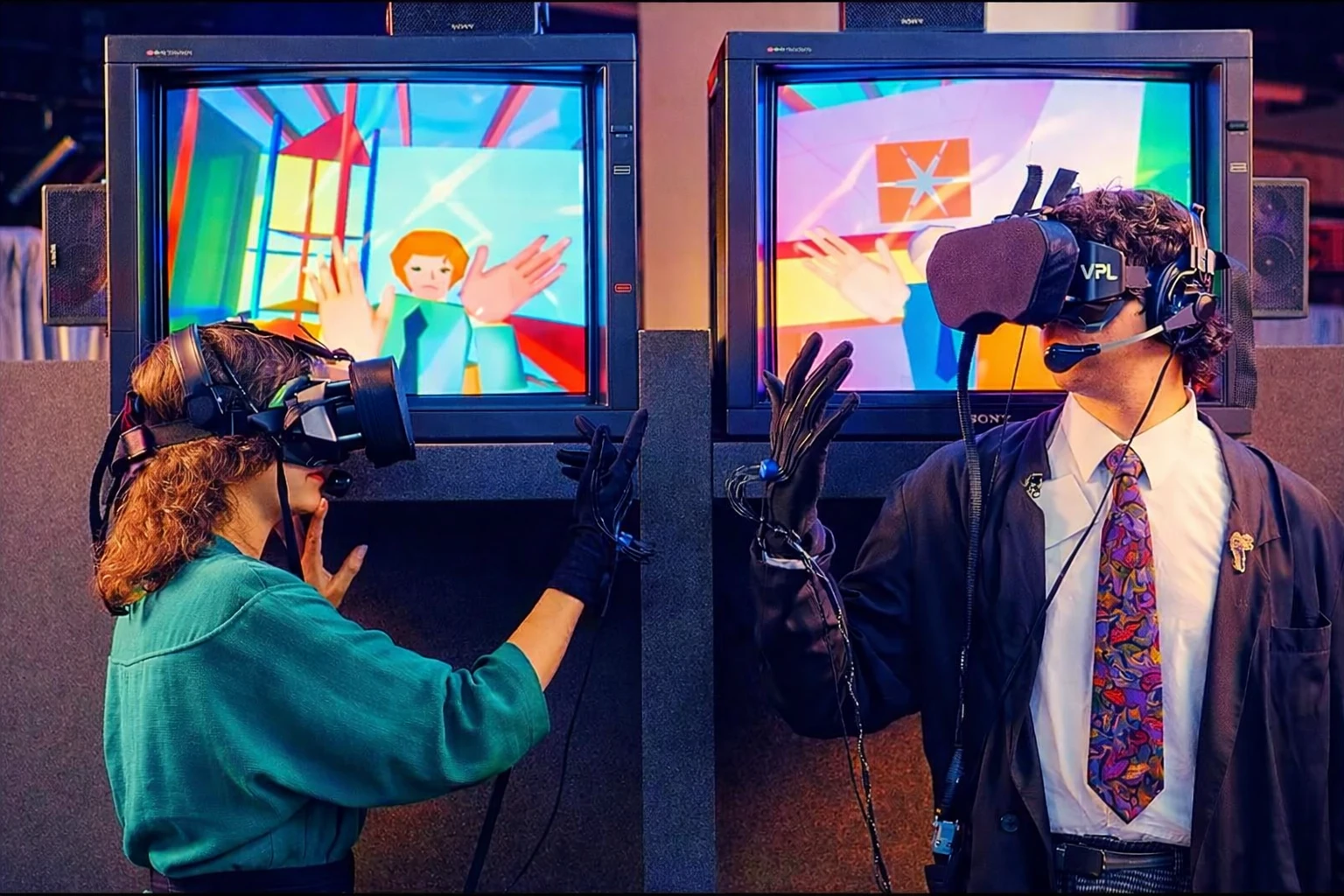
Back in 2015, two friends and I made the crazy decision to start an immersive tech studio. I was the Technical Director, Matt the MD, and Steve was the Lead 3D Artist. At the time, the tech was unproven, best practices were an ever-changing wild west, and most people had no clue what we did – or why we were doing it.
But the VR hype curve was on the up. We found a seed investor and spent those early months learning our trade, building proof of concepts, and telling anyone who’d listen that immersive tech was the future. Over a decade on, the journey of what was Immersive VR (then Immersive Studios, then We Are Immersive, then finally Infinite Form) has come to an end, but it was an incredible ride through the rise and fall (and rise again!) of some of the most innovative tech of recent times.
Here's what I've learned along the way
1. Technology is both a boring tool and a creative canvas
It's true that technology is a tool and, depending on who is using it and why, it can look like a spanner or paint brush. It’s true to say that corporate IT will always want tech to be boringly predictable - safe and reliable are the watch words. On the other hand creative technologists will always want the opposite, often smashing technologies which weren’t ever designed to work together into new, innovative and interesting outcomes to solve problems or produce cool effects.
These worlds don’t easily mesh, and meeting in the middle can be a daunting challenge for anyone, not least the poor client caught between the realities of their corporate IT team’s procedures, and the excitable creative tech agency who wants to do seemingly crazy things.
Bridging that gap has been a skill which requires patience, understanding and a willingness to work with everyone to get to a common zone of comfort.
2. Innovate when you can, when it makes sense
In immersive and creative technology there is always a tendency to try and push the envelope. Knowing when to (and when not to) do this is a careful balance of risk, reward, and budget, and can only be undertaken when multiple viable fall back plans are in place. All this requires time, experience, and total confidence that the desired end result can be achieved. One sometimes has to brush past the naysayers (even on your own team) to get the job done, but when you do get the job done, it’s because everyone has seen the vision, worked hard, and worked together to get there.
Equally, knowing where you can get the best out of technologies which already exist, with little to no ‘outside the box’ thinking, can be just as effective. Face filters are a classic example of this, you can pour a huge amount of creativity into what is essentially an established proven technology, and in doing so build really cool and unique experiences which people will use and enjoy again and again.
3. Nothing moves without great project management
You’d think that in a technology business the technologists are the key to everything, but in my experience it’s the project managers and ops team who make the biggest impact. There is no point in having an awesome developer or amazing creative if you can’t effectively get briefs into them and their best work out of them. A great project manager will interface with your clients and your internal team, plan workloads, remove blockers, alleviate concerns, explain complex ideas in plain English or communicate client priorities in a way which can be easily understood by your team. They are the glue that holds everything together and the lubricant which keeps everything moving.
The challenge for a project manager in immersive and creative tech is that you’re constantly dealing with a shifting landscape. Every project is different, and the ways to achieve even similar projects can change radically depending on how much the technology has moved on, or the constraints you have to work with. A PM who can deal with all of this is worth their weight in gold.
4. The hype curve is real
When dealing with the bleeding edge you see a lot of new and emerging technologies, and every now and then one will catch the wider public imagination. AR, VR, The Metaverse and AI have all been through this process, with the majority of pundits claiming that each will be the next big thing, and the inevitable detractors saying that they’re all solutions in need of problems, or triumphs of marketing over substance.
The truth is often somewhere in the middle – these technologies do often have great uses, but beware of those who claim they will solve your every problem. These technologies often take time to bed in, find their feet and become truly useful, and it’s through the churn of new ideas, experiments, and more than a few failures, that the wheat is distilled from the chaff and we get to what actually works, what is actually useful.
Of course, some (like the Metaverse) will fade away almost completely, but that doesn’t mean the idea was bad, more that the technology (or the public appetite for it) wasn’t quite there yet. After all, we’re now on our third wave of VR (1950/60s, 1980/90s, 2010s-present) and it finally seems to have found a foothold in the general consumer market, if not a huge adoption. The metaverse will likely happen one day, and maybe AI will be the thing that makes it a reality.
5. Running a business is hard
When Matt, Steve and myself set up Immersive VR Ltd over ten years ago we had bright ideas and great hopes. We had to learn and adapt quickly, we went through ups and downs and eventually I was the last one of the original three left. During my 4 or so year tenure running the business I learnt a lot, but the rules of the game changed underneath us and suddenly a business like Infinite Form (AKA We Are Immersive) wasn’t working in today’s modern world.
My new business, Far From Square, is an acknowledgement of that fact – designed to be lean and agile and putting experience at the forefront. I’d like to think that the above paragraphs are evidence that knowing how to apply knowledge and expertise in any given situation is much more valuable than knowing a lot, but not knowing what you don’t know, or how to make the best of what you do have.
I feel super privileged to be starting out again, this time with Lucy Spaull as Operations Director and Jon Rogers as Creative Director, and with myself once again as Technical Director. And this time we start not from scratch, but with a network of super capable individuals who I trust to help us deliver awesome work, and a suite of technology at our fingers (unthinkable 10 years ago) which allows us to punch well above our weight.